Border Collie Feeding Calculator
Get your Border Collie's portions right — calculated for their weight, life stage, and the exact food in your bag. Because the chart on the bag doesn't know your dog.
Values auto-fill from the food you pick. Can't find yours? Choose “My food isn't listed” in the search and copy the numbers from the bag's Calorie Content (ME) label — dry foods typically run 3,300–4,200 kcal/kg.
Border Collie feeding notes
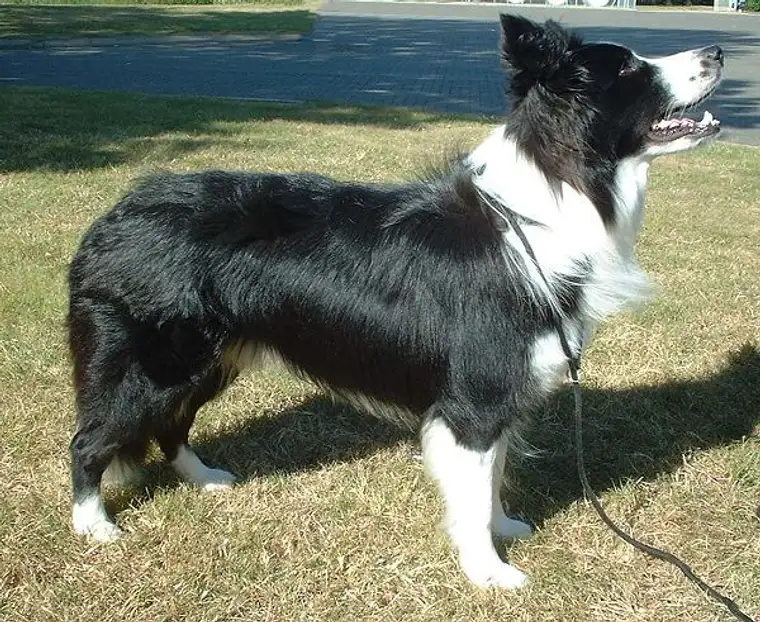
A pet Border Collie maintaining 12-25 kg needs roughly 900-1,300 kcal/day, but a dog working stock or training agility can need double that — recalculate on workload, not bag guidelines. Keep them lean (ribs easily felt, visible waist); UK vet-record data shows the breed living to about 12 years, and lean condition is one of the few factors you control. Note that some lines carry the MDR1 drug-sensitivity mutation — that matters for medications, not meals, but flag it at vet visits.
Border Collie puppy growth chart — male & female
Healthy weight ranges by age. A puppy slightly lean is healthier than slightly heavy — especially for growing dogs.
♂ Male
| Age | Range (kg) |
|---|---|
| 2 mo | 4 – 5 |
| 3 mo | 6.5 – 8.5 |
| 4 mo | 9.5 – 12 |
| 5 mo | 12 – 15.5 |
| 6 mo | 15 – 18.5 |
| 8 mo | 18 – 22 |
| 12 mo | 20.5 – 24.5 |
| 18 mo | 14 – 25 |
♀ Female
| Age | Range (kg) |
|---|---|
| 2 mo | 3 – 4 |
| 3 mo | 5 – 6.5 |
| 4 mo | 7 – 9 |
| 5 mo | 9.5 – 11.5 |
| 6 mo | 11 – 14 |
| 8 mo | 13.5 – 16.5 |
| 12 mo | 15.5 – 18.5 |
| 18 mo | 12 – 19 |
Reference: Weights: kennel-club standard data via Wikipedia/FCI — male 14-25 kg, female 12-19 kg (AKC page weight stats are client-rendered and unavailable server-side); growth midpoints per size-class developmental ratios (medium-large boundary treated as large, estimate). Always confirm against your vet's assessment — individual lines vary.
Feeding guide by growth stage
Meal frequency and food type for a growing Border Collie:
| Age | Meals | Food type | Watch for |
|---|---|---|---|
| 8–12 weeks | 3–4 × daily | puppy formula | Soak kibble warm water 10 min if still soft; weigh weekly. |
| 3–6 months | 3 × daily | puppy formula | Peak growth — feed to the chart, never free-feed; keep puppy lean. |
| 6–12 months | 2 × daily | puppy formula | Growth slows; reduce portions if ribs get hard to feel. |
| → adult (12 months) | 2 × daily | adult formula | Transition over 7–10 days, mixing increasing adult food. |
Border Collie milestones
What happens when — eyes, teeth, maturity, and when hard exercise is safe:
Frequently asked questions
How much should a Border Collie eat per day?
A typical 20 kg neutered adult needs about 1,060 kcal/day (RER 662 × 1.6). Females around 16 kg need closer to 900 kcal, and big 25 kg males up to about 1,250. Feed to condition: you should feel the ribs easily and see a tucked waist from the side.
How much should a working Border Collie eat?
Energy needs scale with work. Under the NRC (2006) factorial system, moderate work multiplies resting energy requirement by about 3, so a 20 kg dog covering serious daily mileage may need 2,000+ kcal — nearly double a pet dog's ration. Use a higher-fat performance formula in work season, re-weigh weekly, and drop back to maintenance rations on rest days.
How much should a Border Collie puppy weigh?
Males average about 6.5-8.5 kg at 3 months, 15-18.5 kg at 6 months and 20.5-24.5 kg at 12 months, maturing to 14-25 kg by 18 months; females finish at 12-19 kg. The breed sits on the medium-large boundary, so growth is slower than a spaniel's — don't chase rapid weight gain.
When should I switch my Border Collie to adult food?
Around 12 months, once growth has largely plateaued. For puppies headed toward 20+ kg, many vets suggest a large-breed puppy formula with controlled calcium, because excess calcium during rapid growth is linked to developmental orthopedic disease. Transition gradually over 7-10 days.
Are Border Collies sensitive to medications like ivermectin?
Some are. The breed carries the MDR1 (ABCB1) gene mutation at roughly 1-5% frequency depending on country, which reduces the blood-brain barrier's ability to clear certain drugs such as ivermectin. A simple cheek-swab test through Washington State University's veterinary pharmacology lab identifies affected dogs. It's a medication issue rather than a diet one, but tell your vet before dewormers or anesthesia.